






The work isn’t finished, the coffee has gone cold, and we’re still sitting in exactly the same position as before. The only thing moving with any enthusiasm is the cursor on the screen. Our legs? Still loyally waiting for their turn (very patient of them).
This scene is all too familiar for those of us who spend our days working in a chair, especially in front of a screen. That’s what makes the dangers of sitting too long so easy to miss: we feel productive, not like we’re doing something risky. And if we already exercised this morning, it feels as if our movement quota for the day has been paid in full.
Put simply, the dangers of sitting too long refer to a higher risk of health problems, such as type 2 diabetes, heart disease, and early death, that is linked to long stretches of uninterrupted sitting. This risk doesn’t automatically disappear just because we squeezed in a short workout, but it can be reduced by regularly breaking up sitting time and staying active on a consistent basis.
Think of our legs as an employee who shows up to the office diligently every day but is never given anything to do. Present from the morning, attendance record spotless, yet their skills slowly go dull from lack of use. The chair, of course, isn’t the enemy; we need it to work and to rest. What needs to change is the habit of staying planted there for hours without a break.
So what do we need to understand and do? There are at least four things. Let’s start with the first.
Understanding the Dangers of Sitting Too Long
The dangers of sitting too long are rooted in sedentary behavior, meaning waking time spent with very low energy expenditure, which many studies link to a higher risk of type 2 diabetes, cardiovascular disease, and death.

A phrase often used to describe this problem comes from obesity and daily activity researcher Dr. James Levine:
“Sitting is the new smoking.”
— Dr. James Levine, while serving as Director of the Mayo Clinic–Arizona State University Obesity Solutions Initiative
It’s a figure of speech, of course, not a calculation that one hour of sitting equals one cigarette. The message is that even a habit that feels completely normal can carry risks that only show up years later.
In health discussions, sedentary behavior covers activities done while sitting, reclining, or lying down when we’re awake, such as typing, watching television, and sitting in a vehicle. Sedentary behavior is different from not exercising enough: a person can work out regularly and still spend most of the day sitting.
Try tallying up a typical day: sitting at breakfast, sitting in an angkot (a shared minivan) or on a motorbike through traffic jams, sitting at work, then sitting again while watching a soap opera or scrolling through social media. Before we know it, the chair has a fully booked schedule.
A systematic review by Biswas and colleagues in the Annals of Internal Medicine (2015) linked high sedentary time to a higher risk of type 2 diabetes, cardiovascular disease, and death. To be fair, most of this evidence is observational: it shows an association, not proof that sitting on its own causes disease.
Here’s the intriguing part: does regular exercise automatically “cancel out” the effects of sitting? A study by Alpa Patel and her American Cancer Society team (2010) followed more than 123,000 adults. The finding can be summed up like this:
“Even among people who are regularly physically active, more leisure-time sitting was still associated with a higher risk of early death.”
— Summary of the findings of Dr. Alpa Patel et al., American Cancer Society (2010)
In other words, sitting time and exercise time should be treated as two separate entries in the logbook. However, this study didn’t measure sitting breaks directly, so we can’t yet conclude how much small breaks change that risk.
Working in the same position for a long time can also leave the neck, shoulders, or lower back feeling uncomfortable. Even the most expensive chair can’t replace the chance to change positions; we’re still human beings, not part of the office furniture. That’s why the WHO guidelines on physical activity and sedentary behaviour recommend limiting sedentary time and replacing it with physical activity, including light-intensity activity.
How Often Should You Take a Standing or Walking Break?
A standing or walking break is best taken roughly every 30 minutes, ideally with an easy walk of about five minutes; this figure comes from a pattern tested in research, not a danger threshold that applies to everyone.

If you had to choose one starter habit to reduce the dangers of sitting too long, try breaking up your sitting roughly every 30 minutes with light movement. Don’t treat minute 31 as a red line; think of it as an easy-to-remember benchmark.
In a randomized crossover trial by Duran and colleagues in Medicine & Science in Sports & Exercise (2023), eleven middle-aged and older adults went through several patterns of sitting and breaks over eight hours. Among the patterns tested, five minutes of light walking every 30 minutes improved both blood sugar response and blood pressure compared with uninterrupted sitting. Interesting, but this was a small, short-term study, not proof that the pattern will definitely prevent a heart attack.
As a rough picture, an eight-hour workday contains 16 half-hour blocks. Five minutes of walking in each block adds up to about an hour of movement, which sounds like a lot for a busy workday. So we can start by standing up and walking for two to three minutes every half hour, then work toward five minutes when the schedule allows. The benefits shouldn’t be assumed to be exactly the same as in the research protocol above. If that’s not possible yet, a break every hour or at every change of task is still better than none at all.
Screen-work guidance from the HSE (the UK’s workplace safety authority) also recommends frequent short breaks along with changes in activity and posture. The practical takeaway: switching from your computer screen to your phone screen while staying seated still hasn’t given your legs a new job.
Examples of Movement Breaks for Desk-Heavy Jobs
A movement break for a desk-heavy job can be an easy walk of a few minutes or, when space is limited, small on-the-spot movements such as calf raises, light squats, and marching in place for two to three minutes.

Reducing the dangers of sitting too long doesn’t have to mean leaving your desk for a long workout. When the reminder goes off or you finish a task, save your work, get up slowly, and give your body a chance to move.
If space and time allow, take a relaxed walk to the water dispenser, to the musala (prayer room), or down the corridor for a few minutes. But if walking isn’t possible, the break can be filled with small movements on the spot. No need for a big room, workout clothes, or getting the whole office to count reps with you (unless they actually want to join in).
- Calf raises: stand with your feet comfortably apart, slowly lift both heels, then lower them again. Hold on to a sturdy desk if needed for balance. Don’t lean on a rolling chair that can slide away.
- Light squats: place your feet about hip-width apart, push your hips back slightly as if about to sit, bend your knees as far as is comfortable, then stand back up. Keep your heels on the floor and your knees in line with your toes. There’s no need to go deep; choose a comfortable range.
- Mini exercises: march in place, lift your knees a little in turn, roll your shoulders slowly, or swing your arms gently. Avoid sudden movements and make sure the space around you is safe.
For example, use a three-minute break for one minute of marching in place, one minute of slow calf raises with rests as needed, then one minute of shoulder and arm movements. This is an example for building the habit, not a target you have to finish without stopping.
These movement choices also have research behind them. In a randomized crossover trial by Dempsey and colleagues in Diabetes Care (2016) involving 24 people with type 2 diabetes, three-minute breaks every 30 minutes filled with half squats, calf raises, and simple muscle movements helped improve blood sugar response compared with uninterrupted sitting. The results were short-term and in a specific group, so the benefits may not be the same for everyone.
Choose movements that don’t cause pain, and stop if you feel uncomfortable. After lunch, add a light walk if you can. The article on the benefits of walking after a meal explains this habit further. Treat it as an extra, not an excuse to save up all your breaks until lunchtime.
Making the Habit of Moving Last Longer
The habit of taking movement breaks lasts longer when it’s attached to a clear trigger, such as finishing a meeting or sending a report, and is paired with regular exercise in line with WHO recommendations.
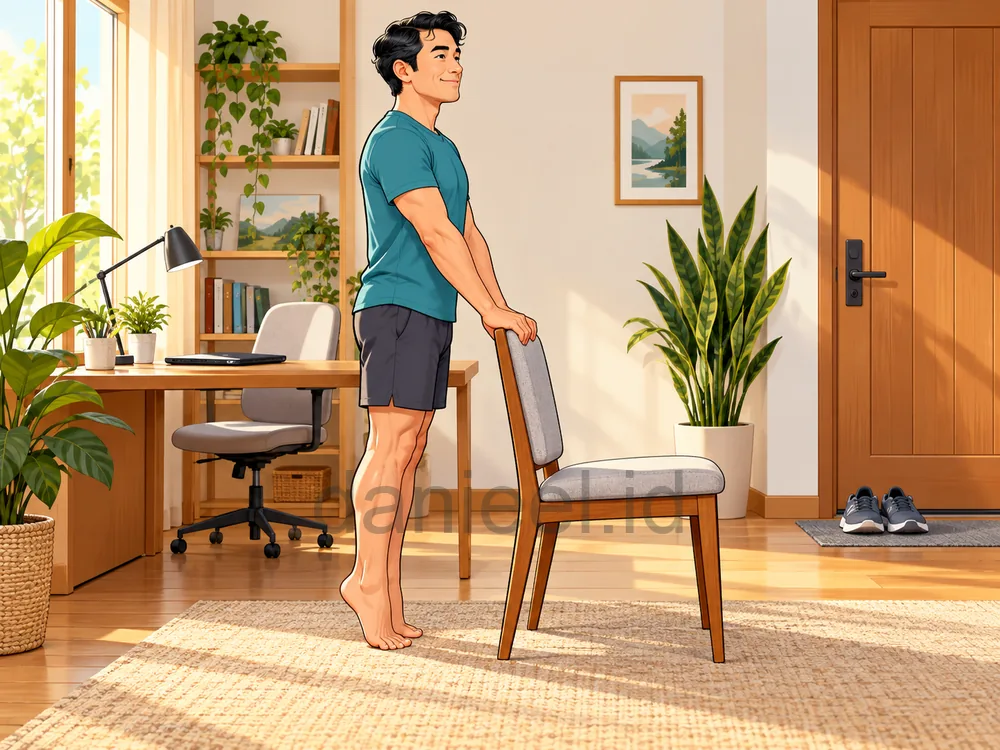
The problem often isn’t that we don’t know about the dangers of sitting too long; it’s that we forget. The reminder goes off, we hit snooze, and suddenly it’s time to go home. That’s why it helps to attach movement to a clear trigger: finish sending a report, stand up; finish a meeting, take a walk; finish eating, stroll around for a bit.
To make choosing easier, here’s a summary of the triggers and breaks we’ve covered, matched to everyday work situations:
| Work situation | Break trigger | Break to try |
|---|---|---|
| Chasing a deadline or writing a report | A reminder about every 30 minutes, or finishing one section | Stand up, then walk to the water dispenser for 2–3 minutes |
| Long meetings, including online meetings | The meeting ends | March in place and roll your shoulders slowly |
| After lunch | Finishing your meal | A short, light walk around |
| Cramped space or hard to leave the desk | The reminder goes off | Calf raises while holding a sturdy desk, light squats |
| Limited mobility | The reminder goes off | Seated arm movements, adapted together with a health professional |
So there’s no one-size-fits-all recipe; pick the row that looks most like your workday, then repeat it until it feels automatic.
For one week, note whether your breaks actually happen. If they’re often skipped, change the trigger or talk about your workload; don’t rush to conclude that we simply lack willpower. As discussed in the tips to become an effective and reliable worker, long hours in a chair are not a measure of good work.
Movement breaks still need to be paired with regular exercise. The WHO recommends that adults do 150–300 minutes of moderate-intensity aerobic activity per week, or 75–150 minutes of vigorous-intensity activity, plus muscle-strengthening activities on at least two days a week. This target can be approached gradually according to your ability; light walking during breaks doesn’t necessarily reach moderate intensity.
How serious are the dangers of sitting too long when they’re not balanced by any movement at all? Mayo Clinic’s summary of the risks of sitting too much, which refers to an analysis of 13 studies, puts it quite plainly:
“Those who sat for more than eight hours a day with no physical activity had a risk of dying similar to the risks of dying posed by obesity and smoking.”
— Mayo Clinic
The good news is that exercise still counts. In a meta-analysis by Ekelund and colleagues in The Lancet (2016) covering more than one million people, the link between sitting more than eight hours a day and higher mortality was not seen in the most active group, equivalent to about 60–75 minutes of moderate activity a day. This is an observational finding, not a guarantee of immunity from disease. So what we need to combine is regular exercise and chances to move throughout the day.
For the muscle-strengthening side, also read strength training after 30.
If you have limited mobility, don’t force yourself to stand; plan suitable movements together with a health professional. If you experience chest pain, unusual shortness of breath, or feel like you’re about to faint, stop the activity and seek medical help immediately.
Common Questions About Sitting Too Long
How long is sitting considered too long?
There’s no single cutoff that applies to everyone. Research on sitting breaks usually interrupts sitting every 30 minutes, while large studies often use more than eight hours of sitting a day as the benchmark for the high-risk group.
Can morning exercise erase the dangers of sitting too long?
Morning exercise helps, but it doesn’t necessarily erase all of the risk. The link between long sitting and early death only disappeared in the group active for about 60–75 minutes a day, so exercise and movement breaks work best together.
Is working while standing better than sitting?
Working while standing is useful for changing positions, but standing still all day isn’t the goal either. A height-adjustable desk is best used by alternating between sitting and short walks, because what the body needs is variety and steps.
What movements can you do without leaving your desk?
Calf raises while holding a sturdy desk, light squats, marching in place, and shoulder rolls can all be done next to your desk in two to three minutes. Choose a comfortable range of motion and avoid leaning on a rolling chair.
Conclusion: Let the Chair Stay Loyal, but Don’t Leave Your Legs Idle

In short, the dangers of sitting too long are linked to health risks that morning exercise doesn’t fully erase. Short breaks roughly every 30 minutes can be a starting point, small on-the-spot movements are enough to begin with, and the habit lasts longest when it’s tied to a clear trigger and paired with regular exercise.
Remember the employee who shows up every morning but is never given a task? Our legs are the same: they don’t need overtime, just small jobs on a regular basis. The first step is simple: set one reminder and pick one short route, for example from your desk to the door, down the corridor, and back again. Small, but something you can repeat tomorrow.
If you could add just one movement break today, when would it make the most sense: after the morning meeting, after lunch, or late in the afternoon when drowsiness starts to creep in? Share your experience below; a small trick that works at your workplace could become an idea for other readers.
The chair can keep us loyal company while we work; what matters is that our legs are no longer just showing up.
Note: this article is for general education and is not a substitute for advice from a doctor or qualified health professional. Adjust your activity to your physical condition and any medical restrictions.
References
- WHO. Guidelines on Physical Activity and Sedentary Behaviour (2020).
- Biswas et al. Sedentary Time and Its Association With Risk for Disease Incidence, Mortality, and Hospitalization in Adults. Annals of Internal Medicine (2015).
- Duran et al. Breaking Up Prolonged Sitting to Improve Cardiometabolic Risk: Dose-Response Analysis of a Randomized Crossover Trial. Medicine & Science in Sports & Exercise (2023).
This post is also available in: