







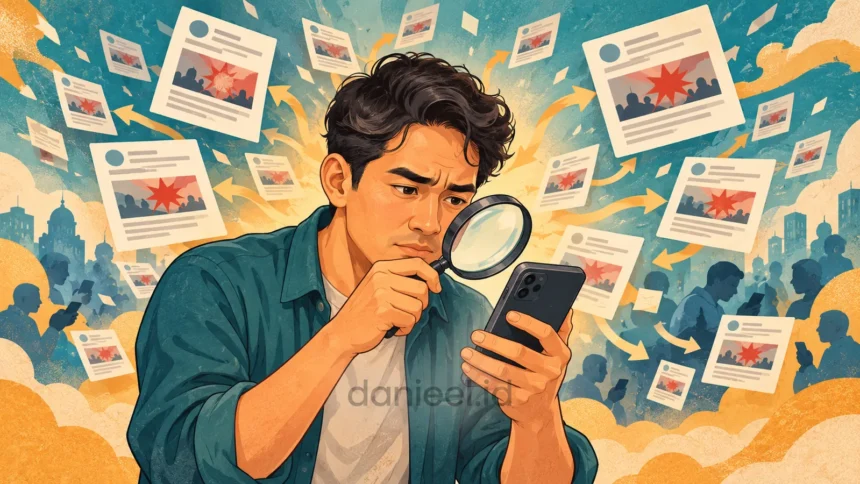
Online hoaxes, or false news, seem increasingly close to our everyday lives. Social media and messaging groups make news so easy to circulate that anyone can become a forwarder. A few taps, and a message has moved from one group to another. Whether it is actually true? Sometimes that question comes later, haha.
Here, I want to look at the motives behind hoaxes, their warning signs, why people fall for them and pass them on, and how we can avoid becoming part of the chain.
One distinction helps: according to UNESCO’s explanation of disinformation, incorrect information shared without an intention to deceive differs from false information deliberately spread to mislead. The person who creates a message and the person who forwards it may have different intentions. Still, good intentions do not automatically make a message true.
The Motives Behind Online Hoaxes
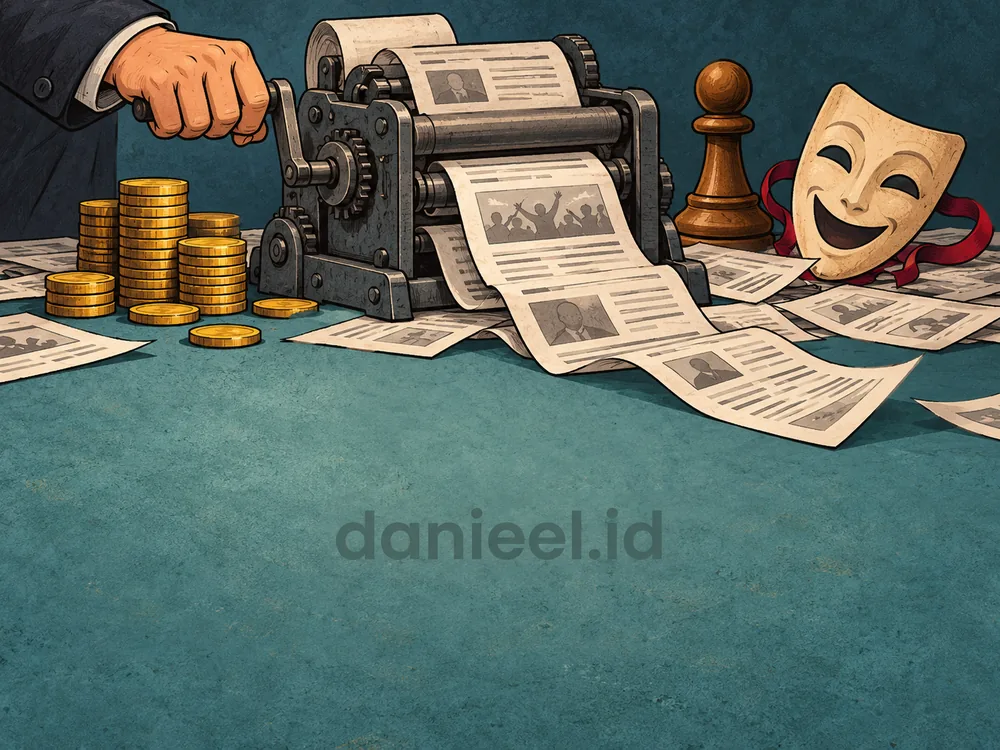
People create hoaxes for all sorts of reasons. In my view, the following possibilities are worth considering, without assuming that every one applies to every case:
- Just for fun. Some people enjoy seeing their made-up story believed and shared widely. It is a way of finding out how far they can take the prank.
- Fraud. False stories can lure potential victims, such as messages about prizes or assistance that lead people to hand over personal information or money.
- Business rivalry. False information can be used to damage the reputation of a product or a competitor.
- Political or ideological interests. Stories are fabricated to benefit a particular group or make another group look bad.
- Commercial motives. Readers’ attention can generate profit. In this kind of operation, the goal is to get people clicking, watching, or sharing, rather than to provide accurate information.
Considering possible motives helps us ask, “Who benefits if I believe this and pass it on?” That question does not prove a story is false, but it is a useful reminder to take a closer look.
Warning Signs of a Hoax
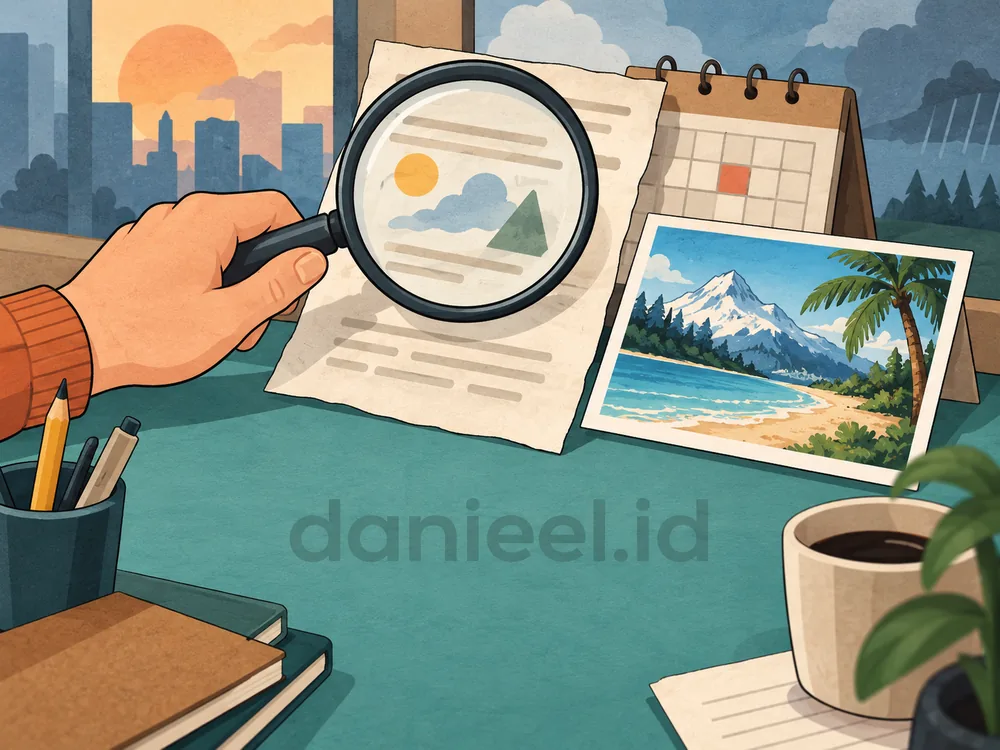
Online hoaxes do not always come as obviously ridiculous stories. Sometimes they look polished and sound convincing. Here are some warning signs that should make us pause:
- An unclear source. The original author cannot be traced. All we have is “a friend sent this,” “from another group,” or a claim by someone whose identity cannot be checked.
- Vague times and places. Old news can resurface as though it has just happened. Dates and locations are often missing.
- Complicated terminology for decoration. Scientific-sounding words are slipped in, but explanations and supporting evidence are nowhere to be found.
- Borrowed authority. Think “according to Professor X…” or “based on research from University Y…”. But does Professor X, or that research, actually exist? Some people cannot be bothered to check; sounding impressive and convincing comes first, haha.
- Sensational headlines. “Shocking…”, “finally exposed…”, “terrifying…”, or “it turns out…”. These do not always mean a story is a hoax, but headlines that stir our emotions deserve a calm examination.
- Illogical claims. Too good to be true, or, at the other extreme, too frightening to accept without adequate evidence.
- Forced connections, or cocoklogi. Convenient facts are picked and fitted together to make a theory look right, while inconvenient facts are left out.
- Dubious websites or links that do not support the message. Some sites deliberately produce false news. Other messages include a link to a reputable news outlet, but the linked article does not support the message’s claim.
- Photos stripped of context. A photo may be manipulated, or it may be genuine but belong to a different event. An authentic photo does not automatically make its caption accurate.
- Pressure to share. “Send this to 10 people you care about,” “don’t let this stop with you,” or “however busy you are, make time to share this message.” Emotional pressure takes the place of reasons we can examine.
AI adds another challenge: images, videos, and voices can be generated or manipulated to appear convincing. UNESCO discusses the challenges posed by AI content and deepfakes to our ability to distinguish information from manipulation. So “I saw the video myself” is not enough; the recording’s origin and context still need checking. Equally, something that looks odd is not necessarily AI-generated.
These signs are prompts to investigate, rather than grounds for a verdict. A true story can have a dramatic headline, while a false one can sound perfectly calm.
Why Do People Fall for Hoaxes and Share Them?

What interests me about online hoaxes is how readily some people believe them and pass them on. Here are a few possible reasons as I see them; naturally, people’s reasons can differ.
- Enjoying the act of sharing. Information that seems good, important, or useful goes straight to our social circles. The intention is to help, but the checking gets skipped.
- Wanting to be first to know. There is satisfaction in being called the “king of information”—rajane informasi. The irony is that repeatedly sharing hoaxes can make someone look “foolish,” haha. Better a little late and accurate.
- Difficulty evaluating information. Not everyone is used to distinguishing original sources, opinions, advertisements, and claims that need evidence.
- Not bothering, or not being used to checking and rechecking. Sharing a message is quicker than checking it.
- Trusting too easily. Especially when a message comes from someone close to us or someone we respect. We trust the sender and, without noticing, start trusting the message too.
- Looking for confirmation. Information that fits our religious beliefs, affiliation, or political choices can feel easier to accept. In my view, news that most flatters our own side deserves just as much scrutiny.
- Religious motivation. The intention to pass on a religious message may be good. Yet enthusiasm can sometimes make people forget to check whether its contents are authentic.
- Wanting to stay alert and play it safe. Messages about dangerous medicines or poisonous food get forwarded with “what if it’s true?” and “what’s wrong with being cautious?” But false news can also cause fear and lead to mistaken decisions.
- Wanting to fit in. Sharing information that agrees with a group’s values can feel like a way of belonging, even when its accuracy is unclear.
- Enjoying conspiracy theories. It can be exciting to imagine the world as a movie: there is always a group of people “out there” plotting something. In my view, though, many events are nowhere near as exciting as a movie plot, haha. Suspicions of a conspiracy still need evidence.
I do not want this list to become a reason to feel smarter than other people. We, too, can be tempted to believe news that fits what we already think. Understanding online hoaxes should begin with examining our own habits.
Do Not Become a Hoax Spreader

Passing on false news can hurt others and damage our credibility. If the information we share repeatedly turns out to be false, people may eventually doubt us even when we say something true.
Here are a few simple habits to help us avoid extending the chain of online hoaxes:
- Recognize the warning signs. Unclear sources, missing dates, and pressure to share are reasons to pause.
- Do not be too trusting. I express caution by turning “everything I receive is true until proven false” into “everything I receive is false until proven true,” haha. In everyday practice, it is more accurate to suspend judgment: unverified, rather than immediately true or false.
- Check and recheck, or practise tabayyun—careful verification. Find the original source and read it through. Check the author, date, location, and whether a quotation actually exists. Many websites repeating the same message do not necessarily amount to multiple independent pieces of evidence.
- Compare relevant sources. Check statements from the institution mentioned and reporting from trusted outlets. We can also look for fact-checks on MAFINDO’s TurnBackHoax. Not finding a news report does not automatically prove a claim false; the information may be new or not yet covered.
- Check photos and recordings. Trace an image’s origin, for example through a reverse image search. See whether it appeared earlier, on another date or in connection with another event. A short recording can leave out important context too.
- Think critically. Is this information true? If it is, would sharing it be useful? Is any context missing?
- Think Before You Share! If something is difficult to verify and still doubtful, it is better not to share it. Drop the idea of “just share it first—maybe it’s true” or “I’ll share it while checking; if it’s a hoax, someone will comment.”
- Consider the impact. Does the message accuse someone, reveal private information, or encourage hatred toward a particular group? If you have already shared incorrect news, send a correction to the same place in clear, polite language.
Conclusion: Verify Before You Share

Online hoaxes remind me that good intentions need to be accompanied by care. We do not have to be the fastest person to share the news. Holding back one unclear message can be more useful than adding to the noise.
To close, let us reflect on the message of Surah Al-Hujurat, verse 6. The verse reminds believers to verify news brought by an evildoer, so they do not harm people unknowingly and later regret their actions.
“O you who believe, if a wicked person brings you news, verify it carefully, lest you harm people without knowing their circumstances and later regret what you have done.” (Quran, Surah Al-Hujurat 49:6)
For me, that reminder connects closely with everyday habits: check first, consider whether sharing would help, then share. Our thumbs may move quickly; our decisions should stay calm, haha.
Also read:
Beware of Gadget Addiction: Being More Fully Present in The Real World
This post is also available in: