








Imagine growing older while still tending a garden, laughing with grandchildren, and walking to the market. The Blue Zones invite us to explore what everyday life might teach us about healthier aging, without treating a hundredth birthday as a target we can guarantee.
These are regions or communities known for exceptional longevity. Five familiar examples are Ogliastra in Sardinia, Italy; Okinawa, Japan; Nicoya, Costa Rica; Ikaria, Greece; and the Adventist community in Loma Linda, California. Some residents reach 100 or more, but longevity and independence are not the same thing.
The appeal isn’t a magic pill or a “superhuman” gene. Health reflects interacting influences, including genetics, environment, healthcare, and social conditions. Still, small routines offer useful lessons. Think of dropping coins into a bamboo savings jar: gardening, eating enough, visiting a neighbor. Each deposit seems ordinary; repeated over time, it adds up.
A quick, honest note: much Blue Zones research is observational, showing associations rather than proving cause and effect. Some extreme-age records have been questioned. An analysis by Luis Rosero-Bixby (2023) found a fading longevity advantage in more recent Nicoya birth cohorts, particularly among men. This is inspiration, not a recipe for reaching 100.
Here are eight lessons: seven about everyday habits, followed by one about respecting the differences between communities.
Prefer watching a video? I also explore these eight lessons from the Blue Zones through narration and illustrations. Watch the video on YouTube, then share which healthy habit you’d like to start. If you prefer reading, continue below the player.
Simple Food: A Lesson from the Blue Zones
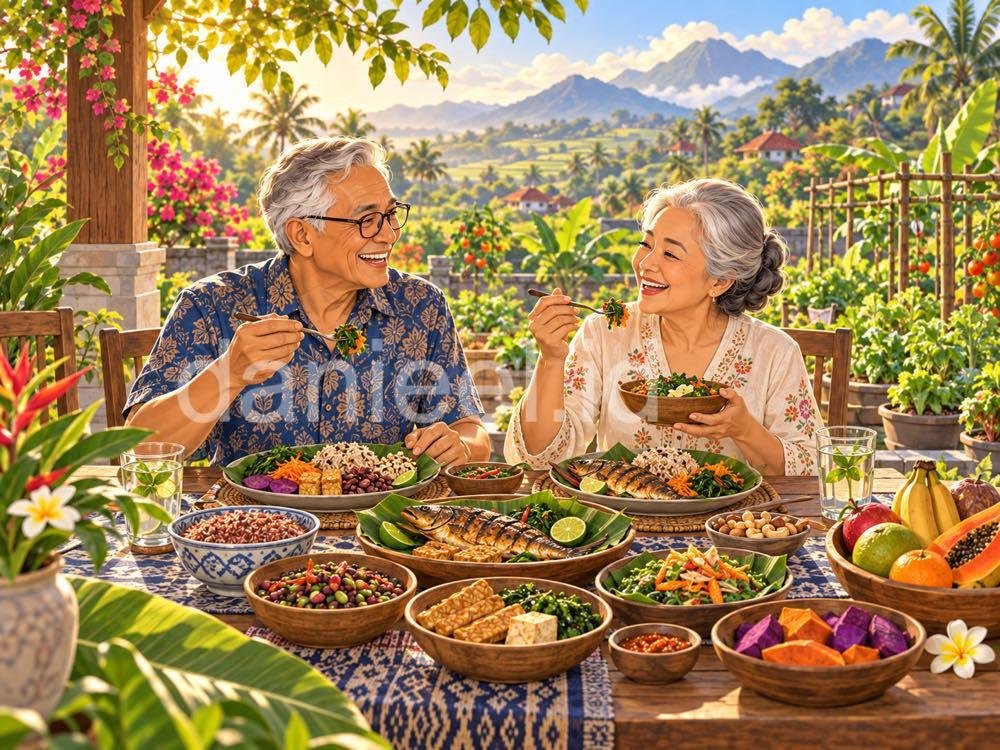
The first lesson isn’t a branded diet. Traditional meals often emphasize recognizable ingredients, mostly plants, with meat playing a supporting role.
In Hall and colleagues’ 2019 clinical trial, 20 adults ate ultra-processed and unprocessed menus for two weeks each. On the ultra-processed menu, they consumed about 508 extra calories daily and gained an average of 0.9 kg, around two pounds. On the unprocessed menu, they lost about 0.9 kg. Participants could eat freely. This short study tested intake and weight, not longevity.
Okinawa’s traditional diet features sweet potatoes, tofu, miso, seaweed, bitter melon, and turmeric. Mediterranean traditions include whole grains, beans, vegetables, and olive oil. Nicoya has rice, beans, and tropical fruit; Adventists often favor vegetables and legumes.
The common thread is a plate closer to the garden than the factory. Indonesian equivalents include tempeh, tofu, sweet potatoes, vegetable soup, and pepes, fish steamed in banana leaves. Whole-grain bread and olive oil may suit one place; sweet potatoes and beans may suit another. Purple sweet potatoes contain anthocyanins, but no single ingredient needs to carry the whole promise of health. Familiar local ingredients matter more than imported superfoods. For ideas, explore 10 easy, affordable superfoods.
Eat Enough Without Feeling Overfull

Okinawans know hara hachi bu: stop when you feel about 80 percent full. It isn’t a stomach gauge, thankfully. The lesson is to slow down and notice enough before “full” becomes “stuffed.”
Willcox and colleagues’ 2007 review discussed lower calorie intake and healthy aging in traditional Okinawan populations. That doesn’t mean restricting food is appropriate for everyone. The review described relatively low calorie intake, little weight gain with age, and low body mass index in the populations examined. That context matters: a traditional pattern cannot simply be reduced to eating less. Older adults still need adequate energy, protein, and other nutrients.
A 2017 study by Kahleova and colleagues involving more than 50,000 Adventists associated meal timing and frequency with changes in body mass index. Larger breakfasts, less snacking, and longer overnight fasts were linked to more favorable weight patterns. These are associations, not universal eating rules.
Learning from the Blue Zones means considering the whole pattern, not counting every grain of rice. The Marshmallow Test article offers another perspective on self-control.
The Prophet Muhammad (peace be upon him) taught moderation in eating: enough mouthfuls to sustain oneself, or, when eating more, a third for food, a third for drink, and a third for breathing. (Summary of the meaning, Tirmidhi 2380.)
Move Naturally Every Day, Not Just at the Gym

Everyday movement is a recurring theme in the Blue Zones: walking, gardening, cooking, and housework. Sardinia’s hilly villages and shepherding traditions provide familiar examples.
Legrand and colleagues (2021) described active lives among older Ikarians aged 90 and above, including farming and walking. This describes the people studied, not every resident.
Arem and colleagues’ 2015 pooled analysis of over 660,000 people linked one to two times the recommended minimum activity with 31 percent lower mortality than no leisure-time activity. The association reached about 39 percent at higher activity levels. For context, one to two times the minimum corresponds roughly to 150–300 minutes of moderate activity such as brisk walking each week. More activity was not associated with endlessly increasing benefit. These are group comparisons, not personal lifespan predictions.
Regular exercise still matters, alongside breaking up long sitting spells. Work at a desk, sit on the journey home, then scroll on the sofa: familiar? Walk to a shop, take suitable stairs, or tend plants within your abilities. Read about walking after a meal for a simple starting point. You can also explore the benefits of strength training after 30.
Have a Reason to Get Up in the Morning

In discussions of the Blue Zones, Okinawa’s ikigai and Nicoya’s plan de vida often express a sense of purpose: a reason to welcome the day.
It needn’t be grand. Caring for plants, taking grandchildren to school, helping a neighbor, or teaching children to read the Qur’an can give the day direction.
The Ohsaki Study, reported by Sone and colleagues in 2008, followed over 43,000 Japanese adults for seven years. Those reporting no ikigai had about 1.5 times the mortality hazard of those reporting it. The observational design does not establish purpose as a treatment. People who feel their lives matter may be more motivated to look after themselves and stay connected, while health itself can also affect how meaningful daily life feels.
In Islam, this echoes the reminder that the best people benefit others (translation of the meaning of a narration recorded by at-Tabarani). Feeling useful can give life direction. We can seek more life in our years, rather than simply more years.
Keep Family and Friends Close

Okinawa’s moai are friendship groups built around mutual support. Research on older Ikarians also describes frequent social contact. Across the Blue Zones, family care and companionship help keep older people involved in daily life.
Holt-Lunstad and colleagues’ 2010 meta-analysis combined 148 studies and more than 300,000 participants. Stronger social relationships were associated with better survival, with a pooled odds ratio of about 1.5. That is not a 50 percent extension of anyone’s lifespan.
Sometimes we count calories and steps but forget to call family. Indonesians use silaturahim for maintaining relationships and visiting relatives or friends. The familiar principle of putting loved ones first includes caring for spouses and keeping generations involved with one another. Sharing a meal, asking about the day, or helping with an errand can make that support tangible. The everyday effort matters.
“Whoever wishes for expanded provision and a longer life should maintain ties of kinship.” (Sahih al-Bukhari 5986; translation of the meaning.)
Our lifespan remains in Allah’s hands. Caring for family ties is a good effort we can make today.
Belong to a Faith Community

Community in the Blue Zones includes shared rhythms of worship and rest. Adventists in Loma Linda observe the Sabbath; research on older Ikarians describes participation in religious activities and village gatherings.
Li and colleagues’ 2016 study followed more than 74,000 American female nurses. Attending services more than weekly was associated with 33 percent lower mortality than never attending. This is a statistical association, not evidence that worship replaces healthcare.
Support, shared routines, and belonging may contribute. In Indonesia, congregational prayer, majelis taklim, or Islamic study circles can offer regular meetings and friends who notice when someone is absent. The practical lesson is connection and contribution, not chasing a particular age.
Make Time to Pause and Rest

Healthy living in the Blue Zones isn’t constant motion. Ikaria is associated with afternoon rest, Okinawan traditions include remembering ancestors, and Adventists pause work for the Sabbath.
Naska and colleagues’ 2007 study of over 23,000 Greek adults linked regular napping with approximately 37 percent lower coronary mortality, with a stronger association among working men. It was observational; napping was not proven to cause the difference.
Don’t force naps if they disrupt nighttime sleep. Prayer, dhikr or remembrance of God, reading, walking, and family tea can provide other pauses. Stress may remain, but we can find ways to settle. Rest isn’t a prize reserved for the day every job is finished.
Different Blue Zones, Different Ways of Life
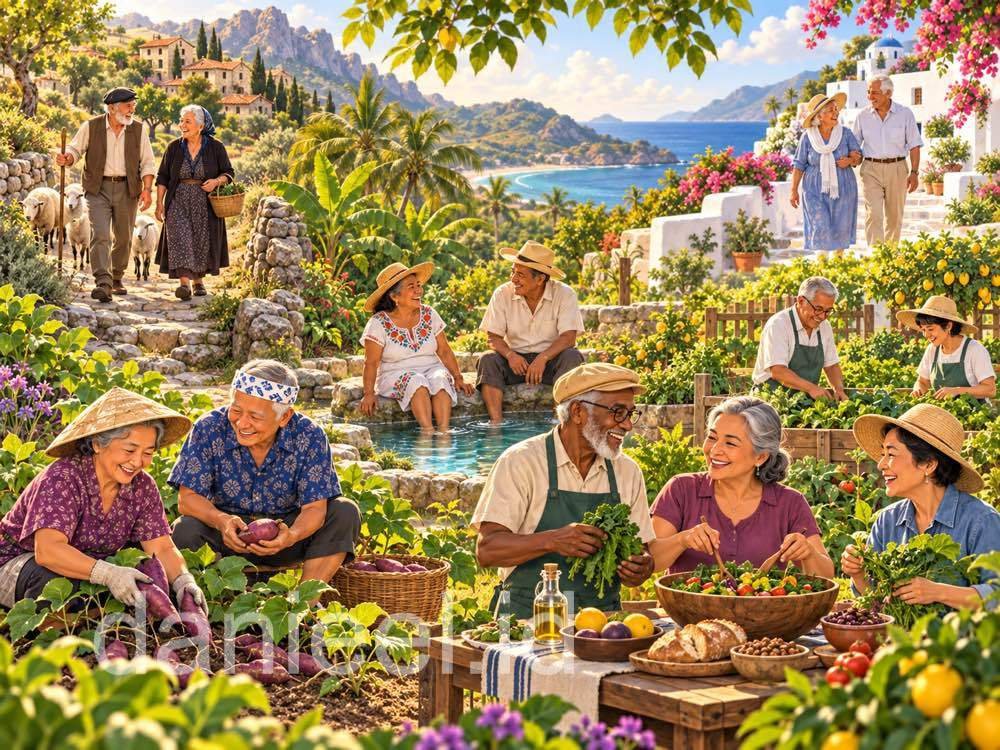
Our eighth lesson is about differences, rather than another habit. Sardinia has steep terrain and shepherding. Okinawa has hara hachi bu, ikigai, and moai. Nicoya emphasizes purpose and family. Ikaria combines Mediterranean food traditions and rest; Loma Linda has Adventist community life.
The Blue Zones aren’t one uniform program. We needn’t copy an Okinawan menu or move to a Greek island. Indonesian parallels include walking to the mosque, gotong royong or mutual help, family meals, backyard gardening, and Eid visits.
Look for principles that fit your circumstances. Fruit on the table is easier to remember than fruit hidden in the fridge. A walk arranged with a friend can be easier to keep than a private promise. Let your environment help, rather than asking willpower to do everything.
Bringing Lessons from the Blue Zones Home
Start with small, repeatable choices:
- Include vegetables and recognizable ingredients in everyday meals.
- Eat slowly and notice enough while meeting your nutritional needs.
- Try a 10–15 minute walk after meals if suitable, and interrupt long sitting spells.
- Identify one reason to welcome tomorrow.
- Call family or friends without waiting for an occasion.
- Join meaningful worship or community activities.
- Make a little room for rest each day.
For a broader routine, explore 18 practical tips for a healthy and fit life. The aim is consistency, not perfection.
Closing: One Small Deposit Today
The Blue Zones remind us that food, movement, purpose, relationships, and rest belong together. Back to that bamboo savings jar: prepare some fruit, walk a little, or call an old friend. Repeat tomorrow.
Our lifespan remains in Allah’s hands, and no lifestyle promises 100 years. We can still care for the years we’re given, with more movement, warmer relationships, and a sense of usefulness.
Which of these eight lessons would you like to try first? I hope this is useful.
This article is for general education and does not replace advice from a qualified healthcare professional.
References
- Buettner D, Skemp S. (2016). Blue Zones: Lessons From the World’s Longest Lived. American Journal of Lifestyle Medicine, 10(5), 318–321. https://doi.org/10.1177/1559827616637066
- Poulain M, Herm A, Pes G. (2013). The Blue Zones: Areas of Exceptional Longevity Around the World. Vienna Yearbook of Population Research, 11, 87–108. https://doi.org/10.1553/populationyearbook2013s87
- Holt-Lunstad J, Smith TB, Layton JB. (2010). Social Relationships and Mortality Risk: A Meta-Analytic Review. PLoS Medicine, 7(7), e1000316. https://doi.org/10.1371/journal.pmed.1000316
This post is also available in: