






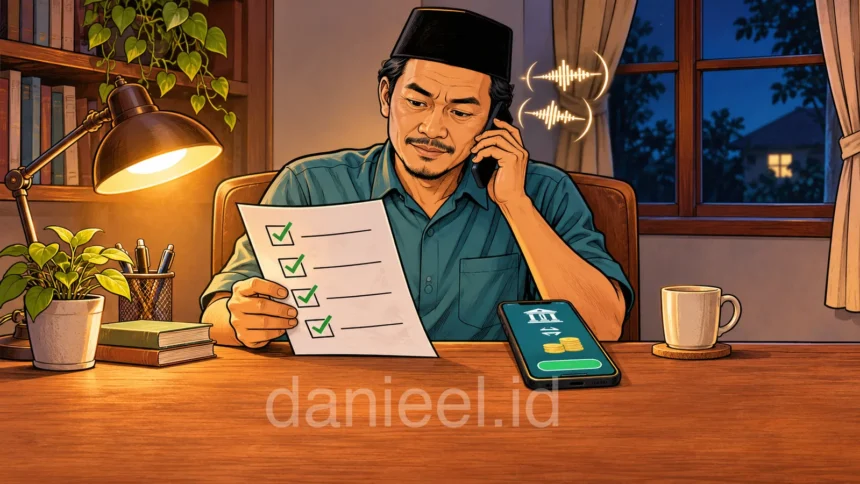
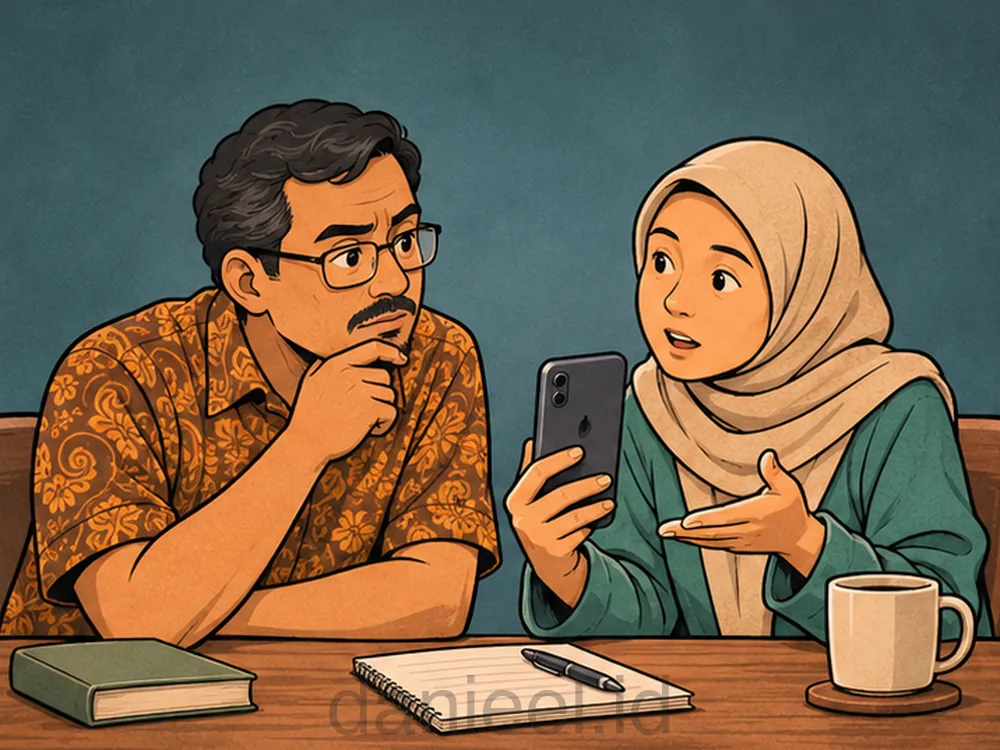
It’s nine at night, and your phone rings from an unknown number. The voice on the other end sounds exactly like your younger brother, right down to the way he talks, and he’s panicking: “I’ve been in an accident, please transfer the money now, I’ll explain later.” Your heart is pounding, and your finger is already opening the banking app. Meanwhile, your brother is fast asleep in his room.

Deepfake scams are frauds that use artificial intelligence (AI) to imitate the voice, face, or video of someone we know, then use that imitation to ask for money, personal data, or OTP codes. The voice version is often called voice cloning, while the face and video version is called a deepfake.
Think of our voice and face as a signature. In the past, a signature was hard to forge without hours of practice. Now, AI can “photocopy” a voice and a face in seconds from videos we post on social media ourselves. Since the signature can be copied, what we need is a way of checking authenticity that can’t be copied.
This topic matters even more in the run-up to Harbolnas 12.12 (Indonesia’s National Online Shopping Day), Christmas, and New Year, when transactions and promo messages flood our phones. So what should we do about deepfake scams? There are at least seven steps, starting with understanding how they work.
Understand How Deepfake Scams and Voice Cloning Work
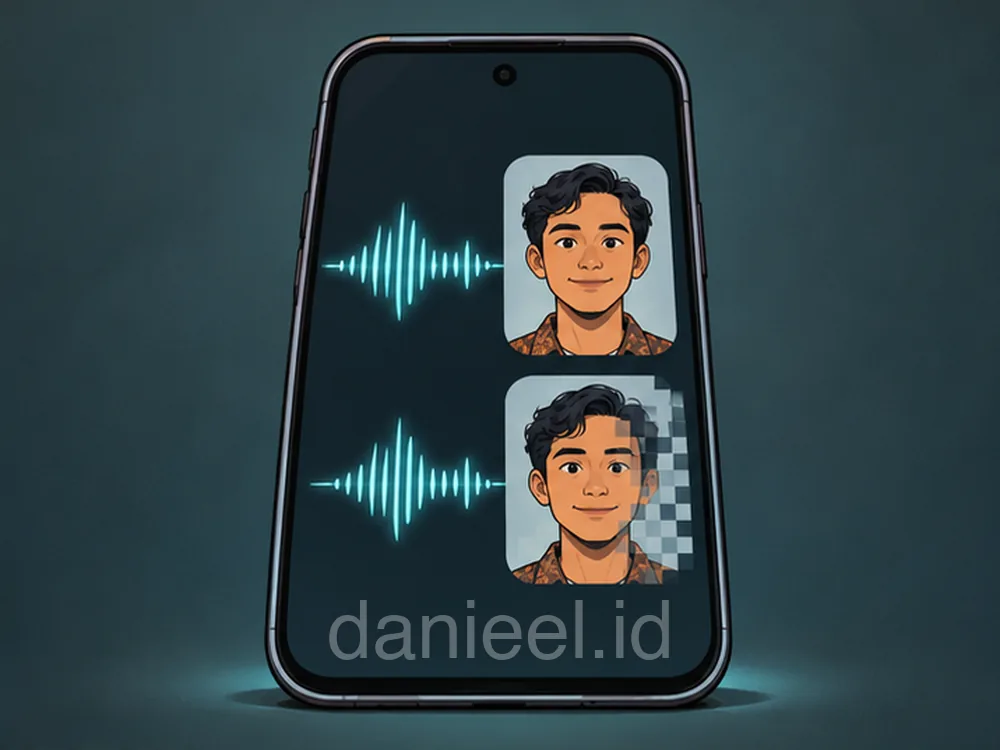
Deepfake scams work by recording or collecting samples of a person’s voice and face, training AI to imitate them, and then contacting the victim as if that person urgently needs help.
Indonesia’s Task Force for Eradicating Illegal Financial Activities (Satgas PASTI) explained two main tactics in its press release. The first is voice imitation: the scammer copies the voice of the victim’s friend, colleague, or relative and talks as if they were that person. The second is face imitation: AI creates a fake video that copies someone’s face and expressions so the victim is convinced they’re talking to someone they trust.
The raw material isn’t hard to get, either. Bisnis.com reported that voice cloning technology lets scammers duplicate a target’s voice from only about three seconds of audio. Three seconds is roughly how long it takes to say “Hi, happy birthday, Mom!” in an Instagram or TikTok video (the one we may be proudly posting right now).
The following table summarizes the most common deepfake scams, the lines scammers typically use, and the quickest way to check each one.
| Scam type | What the scammer says | How to check |
|---|---|---|
| Family member in trouble | “I’ve had an accident, transfer now.” | Ask for the family safe word |
| Boss asks for a transfer | “Pay this vendor first, I’m in a meeting.” | Call back on the office number |
| Relative borrows money | “I changed my number, can I borrow some?” | Call the old saved number |
| Celebrity video | “This investment is guaranteed to profit.” | Check official channels and OJK |
The pattern is always the same: deepfake scams combine a familiar voice or face with an urgent request for money, so the safest response is to verify through a different channel before acting.
Understand Why We Fall for It So Easily
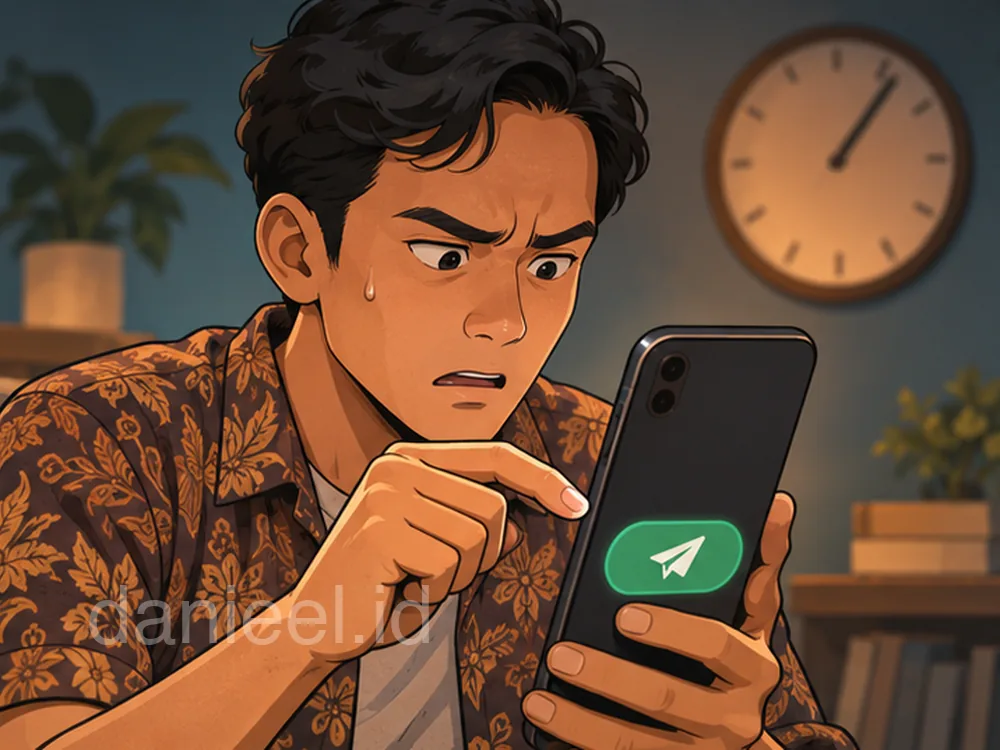
We fall for deepfakes easily because scammers go after our emotions first, not our logic: panic, love, or reluctance to say no to a boss makes us act before we have time to think.
The scale is big, too. A VIDA survey cited by Katadata found that 65% of Indonesians receive a scam attempt at least once a week, through email, SMS, WhatsApp, phone calls, or social media. In other words, out of every three people in a family WhatsApp group, two are likely being approached by scammers every week.
The losses are no joke either. Indonesia’s Deputy Minister of Communication and Digital Affairs, Nezar Patria, as quoted by Bisnis.com, said that losses recorded by OJK (Indonesia’s Financial Services Authority) this year amount to around Rp9 trillion, with many cases involving deepfakes. Meanwhile, OJK had received about 702,000 scam reports as of mid-October 2026.
Scammers are also good at picking their moment. According to OJK, scams that pile up at the end of the year are indeed tied to online shopping. While we’re busy chasing promos and sorting out holiday travel, an “emergency” call from family feels all the more believable. So our guard actually needs to go up when things are busy and cheerful.
Set Up a Family Safe Word Right Now
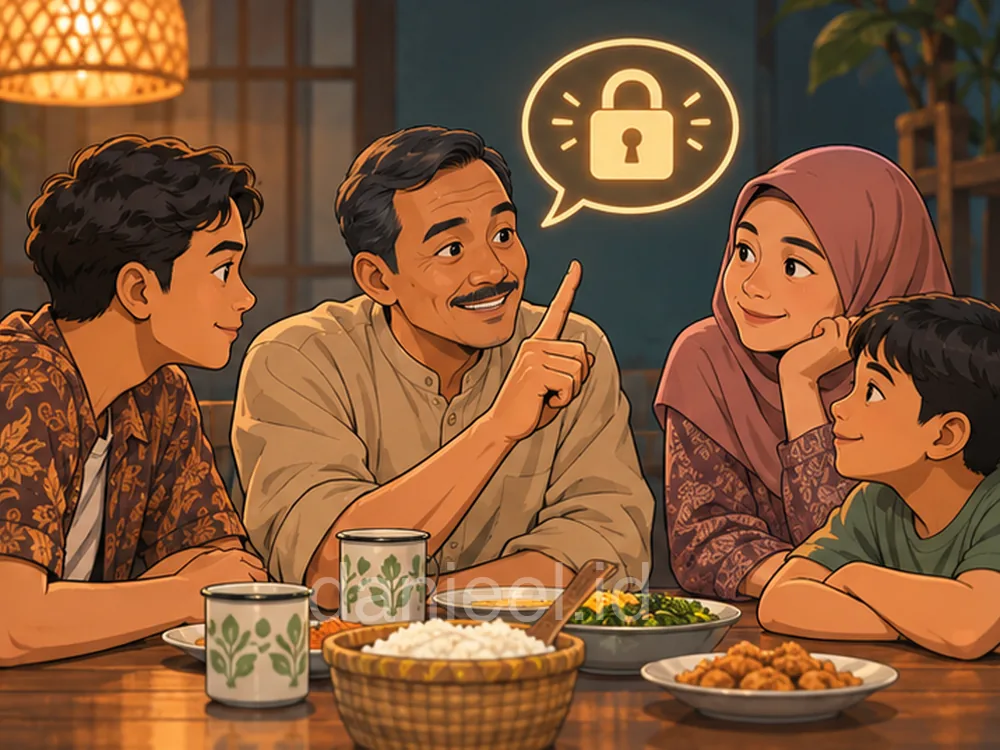
A family safe word is a secret word or phrase known only to your immediate family, which must be asked every time someone makes an urgent request for money or help by phone, voice message, or video call.
This method is simple, free, and doesn’t depend on our ability to spot AI. No matter how sophisticated a deepfake is, the scammer doesn’t know a word that has only ever been spoken at the family dinner table. The idea is like the password used by neighborhood night-watch patrols in Indonesian villages: anyone who doesn’t know it doesn’t get through.
To make it work, follow these rules:
- Agree on it in person, for example over dinner, not through a chat that others might read.
- Choose a word that can’t be guessed from social media. Avoid pet names, birthdays, or school names you’ve posted before.
- Include parents and children, because they are the most frequent targets.
- Change the safe word if there’s any chance it has leaked, for example after it was said in front of other people.
Here’s what the conversation might look like. Caller: “Mom, I’m at the police station, please transfer the money now.” Mom: “Okay, dear. What’s the safe word?” If the caller dodges the question, gets angry, or claims to have forgotten, that’s a strong sign to hang up. A real child won’t be offended by being asked for the safe word; in fact, they’ll be relieved.
Hang Up, Then Call Back on the Saved Number
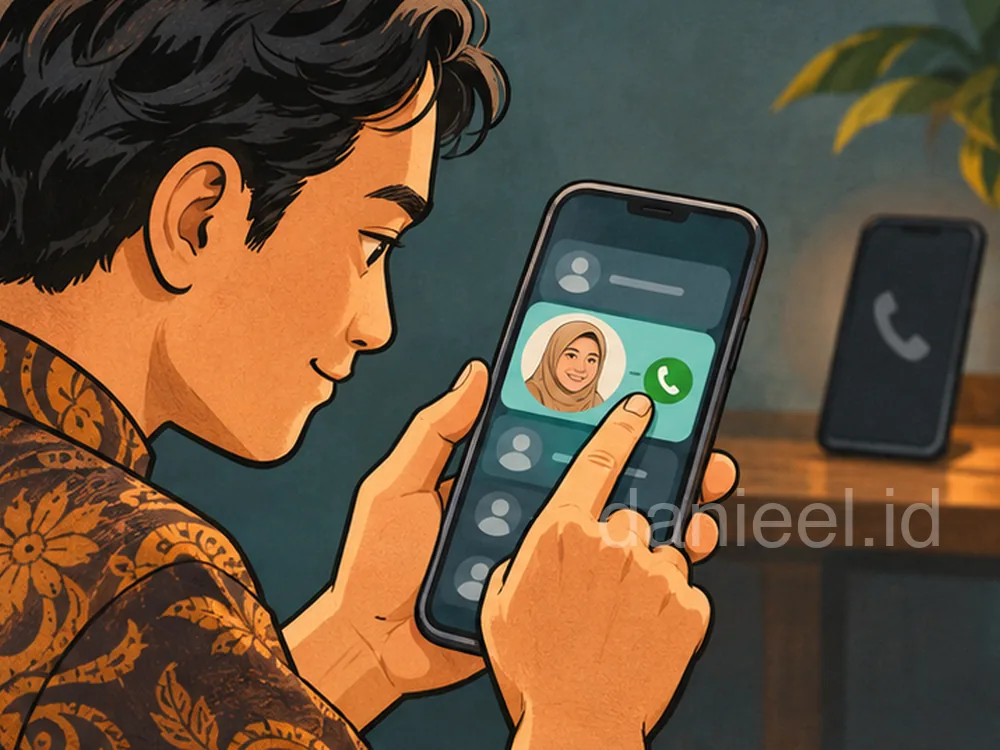
The most reliable way to verify an urgent request is to end the call, then contact the person through the number that has long been saved in your contacts, not the number that just called you.
Satgas PASTI firmly recommends that any unusual request for money or personal data always be confirmed through another communication channel. Scammers usually apply pressure with lines like “don’t hang up,” “there’s no time,” or “don’t tell anyone.” Those lines are actually the alarm: a genuine emergency can still wait two minutes for verification.
At work, the principle is the same. If your “boss” asks you to transfer money to a new vendor account via a voice message, contact your boss on their office number or ask a colleague in the same room. Well-run offices usually have a rule that any change to a vendor’s bank account number must be confirmed through two channels.
If you can’t reach the family member on their saved number, try other relatives, their close friends, or their workplace. One sentence we should all memorize together: no transfer before verification.
Learn the Signs of a Deepfake Video Call
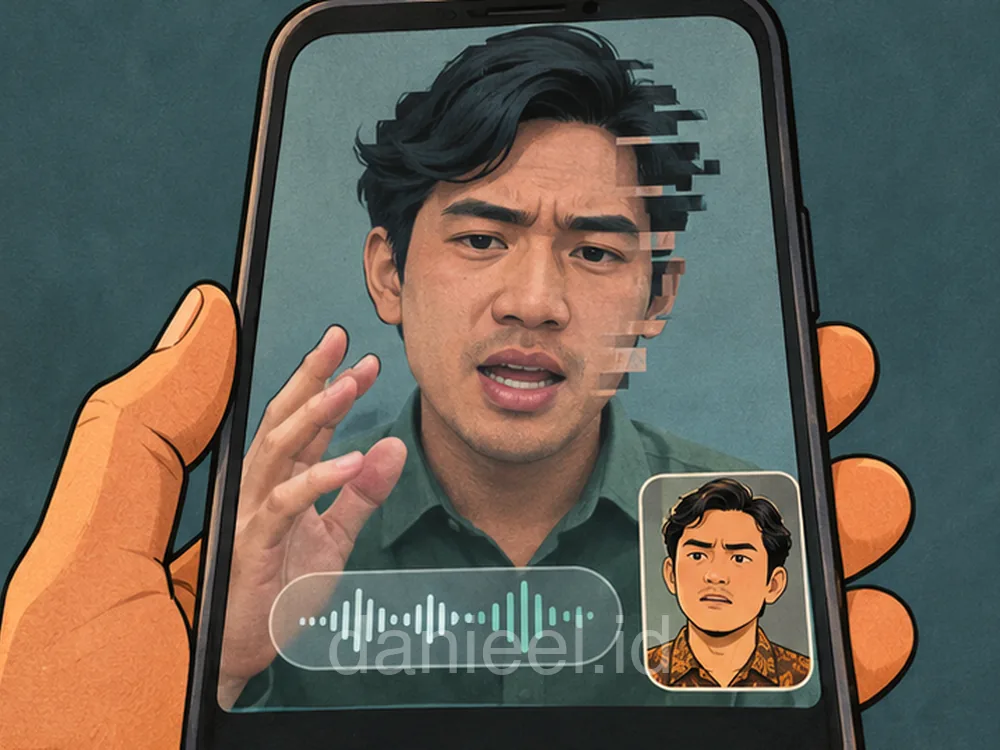
A deepfake video call can often be recognized by deliberately poor image quality, lip movements that don’t sync with the voice, and a face that seems to float or break apart when the person turns to the side.
Cybersecurity company Kaspersky suggests a simple trick: ask the other person to turn their head fully to the side. Most deepfakes are built from photos and videos facing the camera, so when the head turns, the face may shift, distort, or break up. Kaspersky also notes that scammers often pretend their signal is cutting out, then send a low-quality recorded video, blaming a poor connection.
A few other signs worth being suspicious of:
- The eyes rarely blink, or blink with a strange rhythm.
- Lip movements are slightly behind or ahead of the voice.
- The lighting on the face doesn’t match the background.
- The person refuses to answer a simple personal question, such as “Where did we eat yesterday?”
- The call quickly turns to a request for money, an OTP, or an “investment” with guaranteed returns.
One thing to keep in mind: these signs are getting harder to see as AI keeps improving. That’s why visual tests are only an extra layer. The main defense is still the family safe word and the callback, neither of which depends on how sharp our eyes are.
Protect Your Voice Footprint and Personal Data
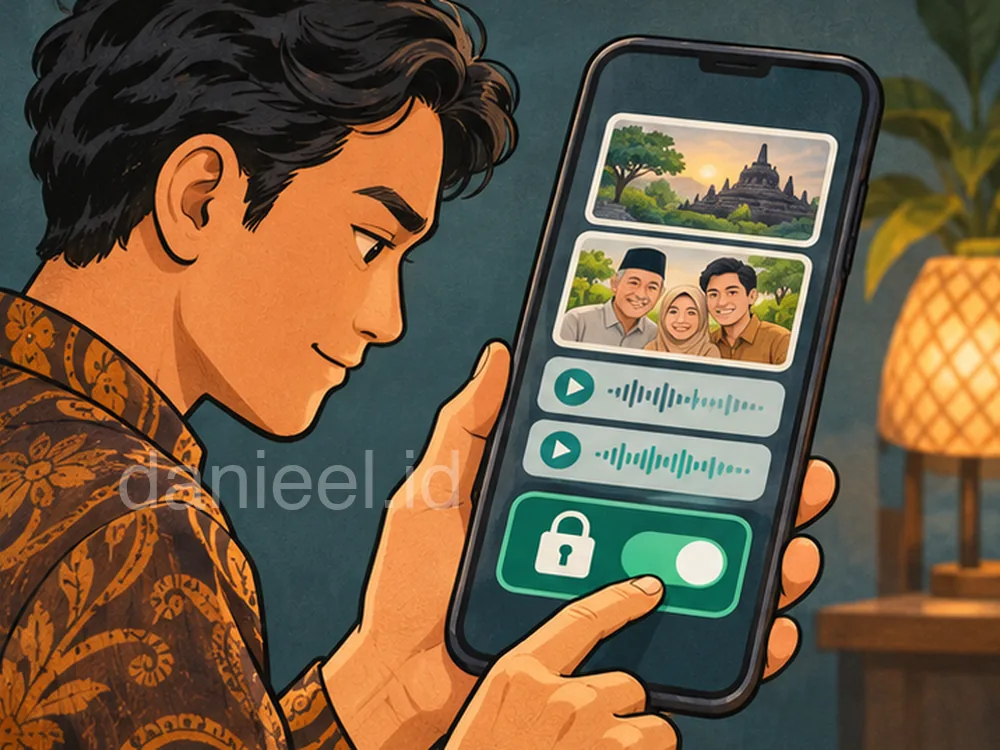
Reducing the voice recordings, face videos, and personal data that are publicly available makes it harder for people behind deepfake scams to gather material to imitate us and our families.
We don’t need to quit social media, but there are a few simple habits we can start today:
- Set your account to private if it contains a lot of family videos, especially videos of children and parents.
- Don’t answer unknown calls with long sentences. Some scammers call just to record the victim’s voice.
- Never share an OTP code, PIN, or password with anyone, including people claiming to be bank staff, couriers, or family.
- Turn on two-step verification for WhatsApp, email, and banking apps, so your accounts can’t easily be taken over and used to scam your contacts.
- Check your accounts regularly using the guide on 11 ways to secure your digital accounts, including revoking access for apps you no longer use.
The habit of filtering information is still relevant too. We’ve discussed this mindset before in the article on online hoaxes: pause for a moment, check the source, and don’t forward something just because it feels urgent. A deepfake is basically a hoax that calls your phone directly.
For those who have started giving an AI assistant access to their email or work files, the risk adds another layer: a message containing hidden instructions can hijack that AI. I cover this in the article on AI agents and how they differ from chatbots.
If You’ve Already Transferred Money, Report It Within Minutes
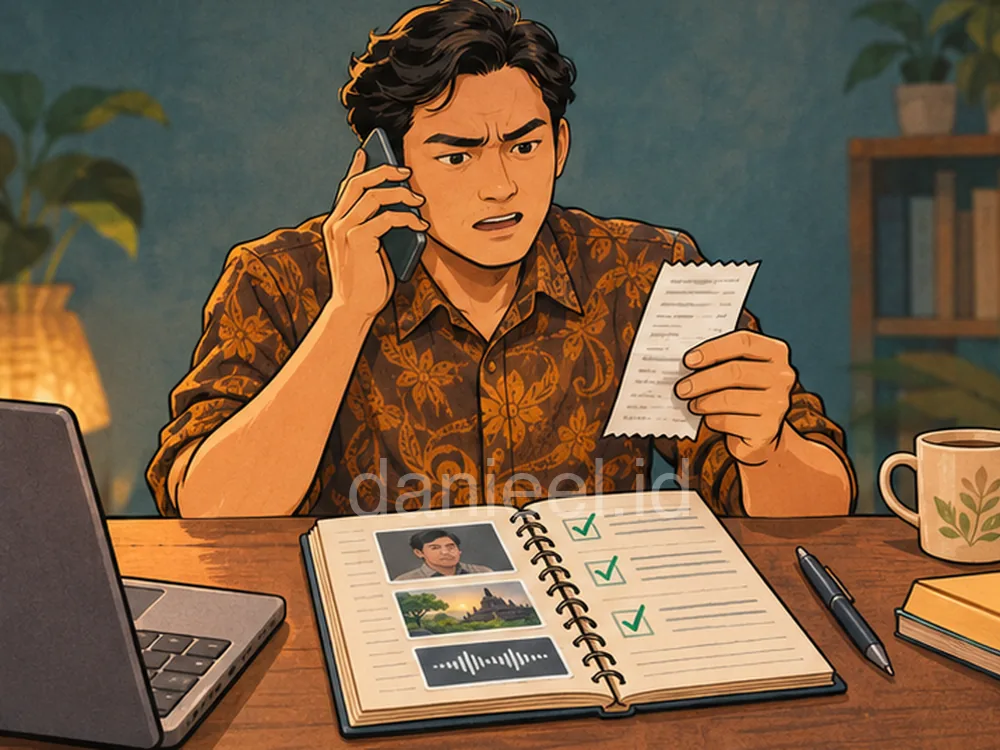
Victims who have already transferred money should immediately contact the sending bank and report to the Indonesia Anti-Scam Centre (IASC) at iasc.ojk.go.id, because how fast the report is made largely determines whether the funds can still be blocked.
OJK explains that the speed of reporting strongly affects how much of a victim’s money can be saved. Ideally, a report should be filed within 10 minutes or less of the incident. In reality, victims report on average about 12 hours after the incident. As a rough comparison, 12 hours is 72 times longer than the ideal window, plenty of time for scammers to move the money into many other accounts.
Here’s a sequence you can follow right away:
- Call the sending bank’s call center and ask them to hold the transaction and block the recipient account.
- Report to IASC at iasc.ojk.go.id. According to Katadata, the form asks for the victim’s identity, a timeline of events, the scammer’s account number, the amount lost, and proof of the transaction.
- Contact OJK’s hotline at 157 or WhatsApp 081157157157 if you need help filing the report.
- Keep all the evidence: chat screenshots, call recordings if any, the scammer’s number, and the transfer receipt.
- Consider reporting to the police. Thanks to cooperation between OJK and the Indonesian National Police’s Criminal Investigation Agency (Bareskrim Polri), police complaints can now also be filed through the IASC system.
- Let your family and close contacts know that someone is imitating a family member’s voice or face, so they don’t become the next victims.
The good news is that this effort isn’t wasted. IASC had returned about Rp161 billion to 1,070 victims as of January 2026. It’s small compared with total losses, but that chance only exists for those who report quickly. Save the bank’s number and the IASC address on your parents’ phones right now; don’t wait until something happens.
Frequently Asked Questions About Deepfake Scams
Can AI copy our voice just from social media videos?
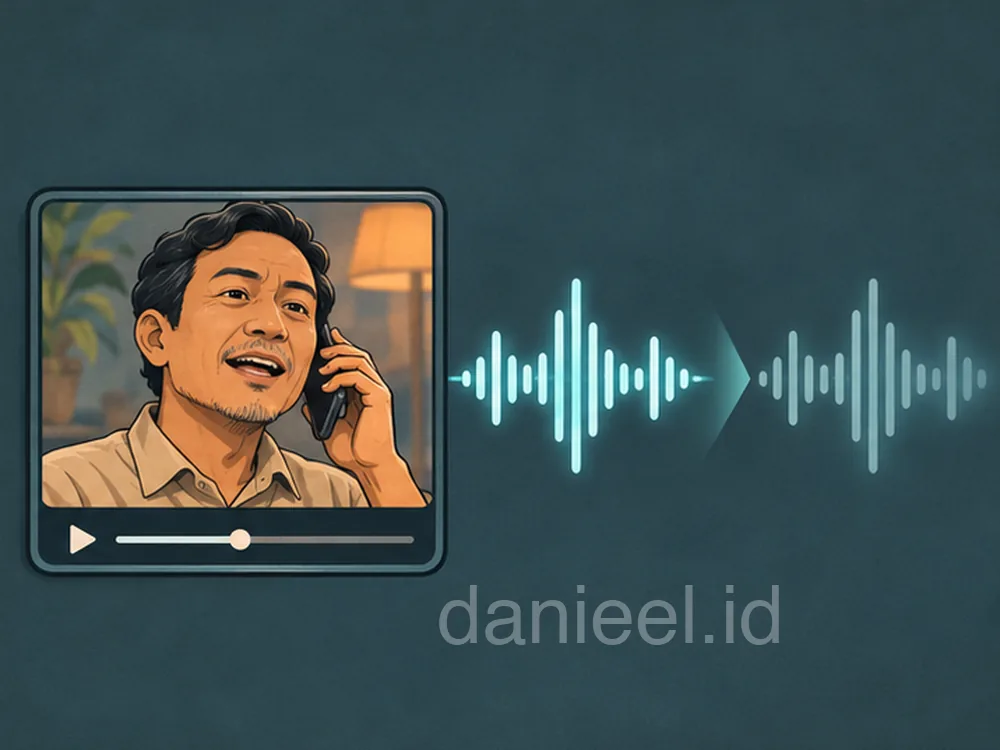
AI can indeed copy a person’s voice from short recordings posted on social media, including greeting videos, live streams, or voice messages. The more recordings are publicly available, the easier it is for scammers to get material. That’s why limiting who can see your family videos is a sensible preventive step.
How can we protect elderly parents from deepfake scams?

The most effective way to protect parents from deepfake scams is to create a family safe word together with them and practice the habit of calling back before transferring money. Write down the children’s important numbers and the bank’s call center number on a piece of paper that’s easy to reach. Repeat the practice now and then, because new habits need repetition.
Are deepfake detection apps reliable?
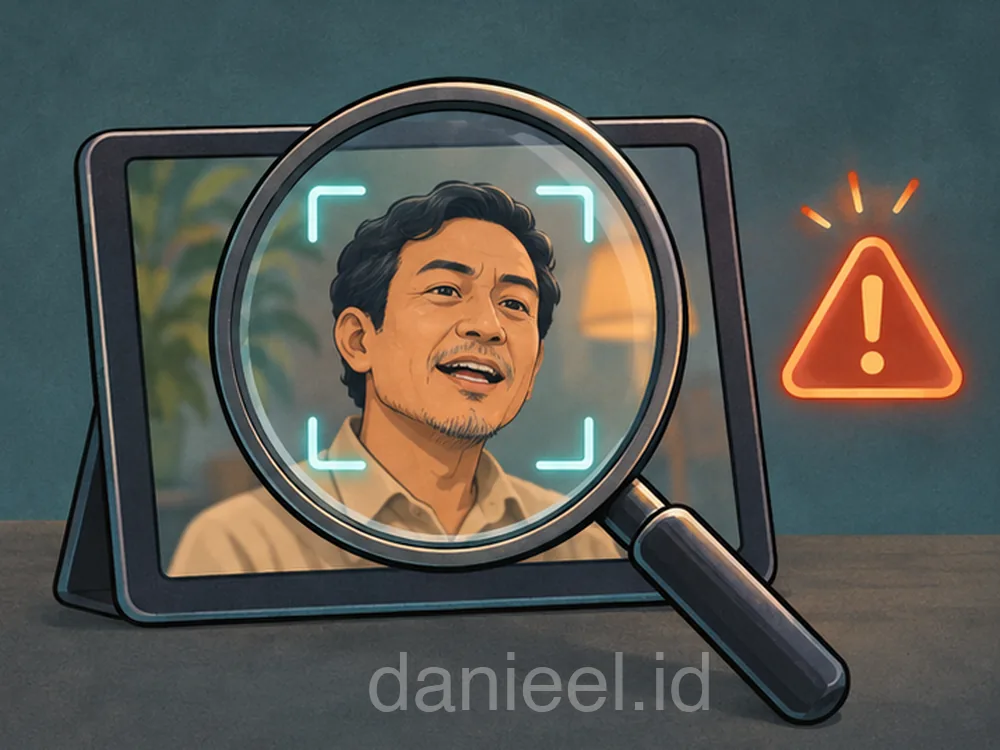
Deepfake detection apps can help as an extra layer, but they shouldn’t be your only safeguard because faking and detection technologies keep racing each other. Detection results can be wrong, either letting a fake video through or flagging a real one. Verifying with a family safe word and a callback remains more reliable.
Can victims of deepfake scams report to the police?
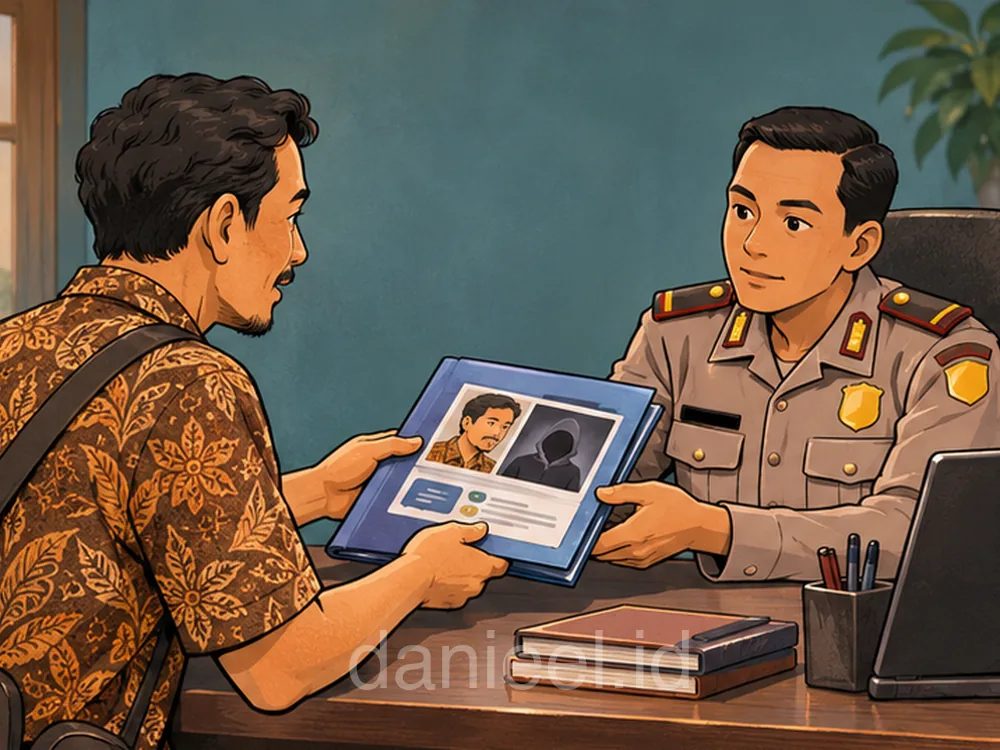
Victims of deepfake scams can still report to the police, and reports to IASC can now be forwarded as police complaints thanks to cooperation between OJK and Bareskrim Polri. Prepare the timeline and as much evidence as possible before reporting. A well-organized report makes it easier to trace the scammer’s accounts and identity.
What should you do if your face or voice is used to scam others?
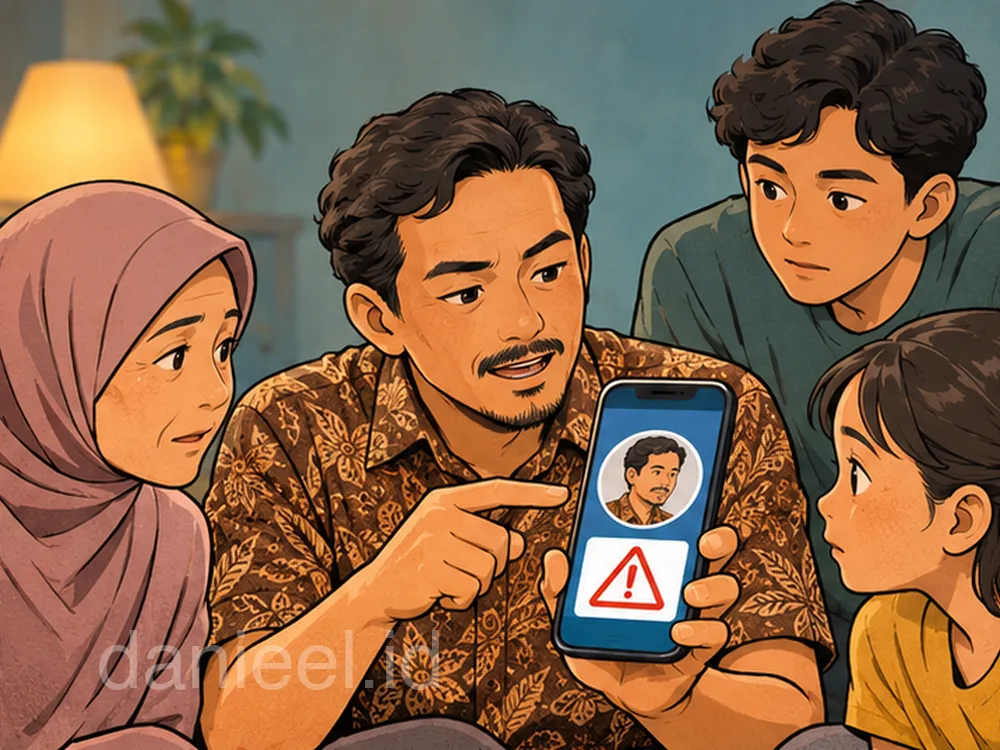
If your face or voice is used to scam people, tell your family and close contacts right away so they don’t respond to requests made in your name. Report the fake account or content to the social media platform, keep all the evidence, and consider reporting to the police. After that, tighten your account privacy settings so new material isn’t easy to collect.
Voices Can Be Copied, Our Habits Can’t
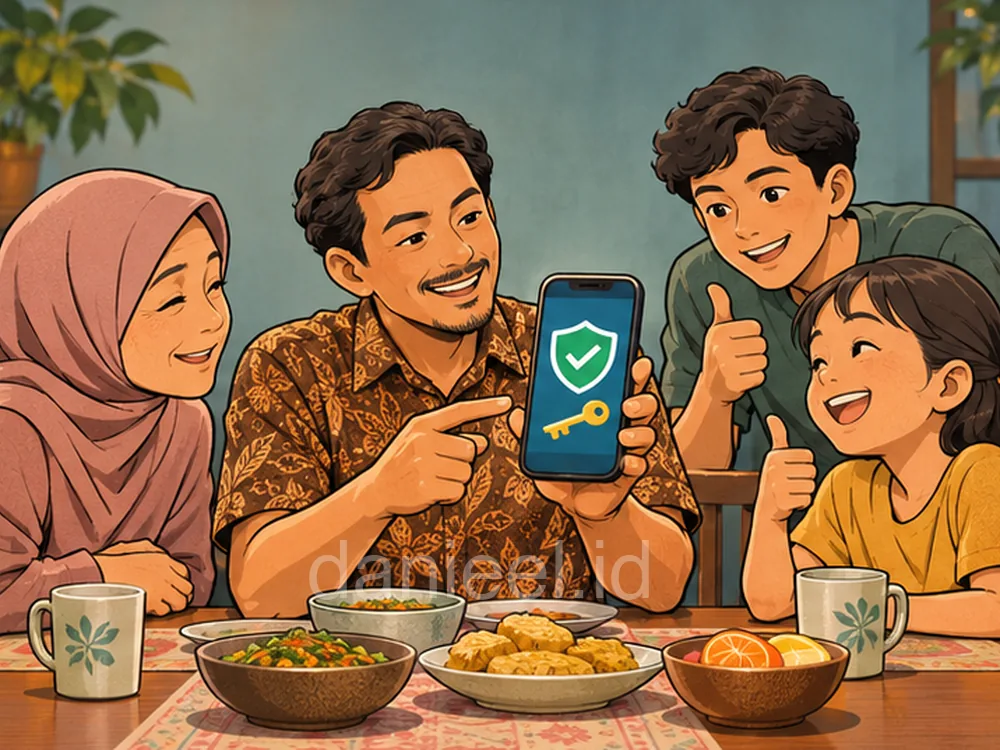
In short, deepfake scams succeed because we panic and trust a familiar voice or face. The seven steps above turn the tables: understand how they work, recognize our emotional weak spots, set up a family safe word, call back on the saved number, be suspicious of odd video calls, protect your digital footprint, and report within minutes if you’ve already transferred money.
Back to that signature: our voices and faces can now be photocopied, but a family safe word and the habit of verifying can’t be copied by a machine. The first step can be taken tonight, over dinner: agree on a safe word, then save the bank’s call center number and the IASC address on your parents’ phones.
Does your family already have a special way to make sure a caller really is a family member? Share your tips or experiences in the comments; one story could save another family’s savings.
May we all stay protected, and stay calm every time an “emergency” call rings.
This post is also available in: