





I was stunned to see a line on Instagram: every time we eat or drink, we’re giving our bodies ingredients to maintain their health or to add to their burden. It’s simple, but it feels right. In the midst of so many food choices, we often know which ones are good—the problem is, unhealthy ones are usually more tempting.
We seem to be choosing between momentary pleasures and long-term benefits. It doesn’t mean that life has to lose its taste. In my opinion, the challenge is to find food that is delicious, easy to obtain, and nutritious enough to be present in the daily menu.
“And eat of what Allah has given you as lawful and good sustenance, and fear Allah in whom you believe in Him.” (QS Al-Ma’idah [5]: 88)
That’s where this list of easy-to-provide superfoods comes from. The term superfood is not actually an official scientific category and no single food can work like a miracle cure. However, this term is practical to refer to nutrient-dense foods that contain fiber, healthy fats, vitamins, minerals, or bioactive compounds.
I chose ten ingredients that are relatively easy to find and quite reasonable for home supplies. All of them still need to be placed in a diverse diet. The WHO guidelines on healthy eating also emphasize fruits, vegetables, nuts, whole grains, as well as restrictions on sugar, salt, and saturated fat. So, let’s look at these easy-to-prepare superfoods as part of good habits, not shortcuts.
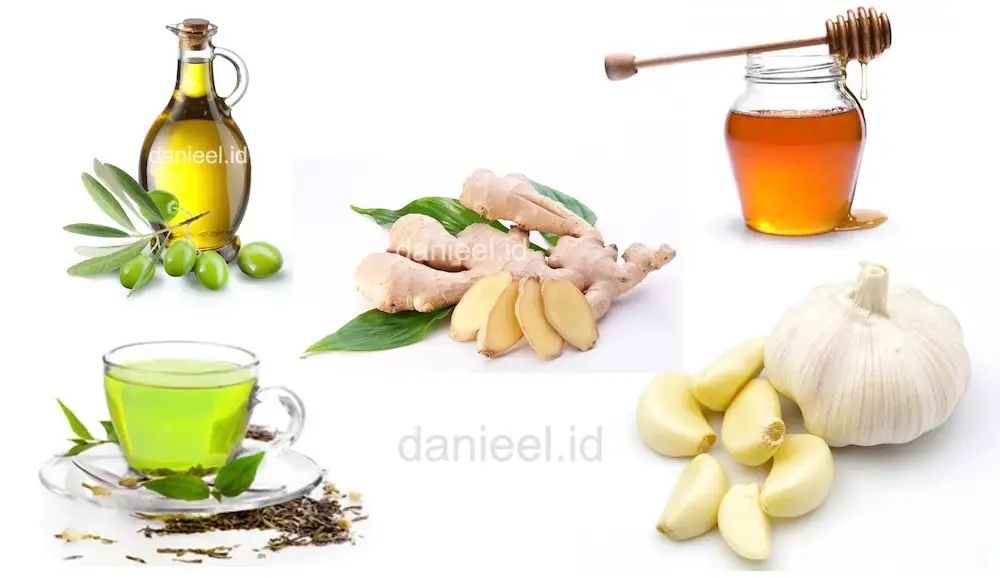
Olive Oil

Olive oil is well-known for being rich in monounsaturated fatty acids and polyphenol compounds. When used to replace saturated fat, it can help form a more heart-friendly diet. Evidence from the Mediterranean diet also suggests that the combination of olive oil, nuts, vegetables, and whole foods is linked to better cardiovascular health.
For salads or food mixes, I choose extra virgin olive oil because it is minimally processed and generally retains more aromatic compounds and polyphenols. Olive oil can still be used for cooking at a reasonable temperature; what should be avoided is to let any oil smoke or use it repeatedly. An explanation of unsaturated fats and oil options can be read more here.
The easiest way to enjoy it is a spoon or two for salad dressings, vegetables, or side dishes. Keep it to taste because all oils are calorie-dense.
Garlic

The smell of garlic is strong, but that’s where sulfur compounds like allicin are stored. These compounds are formed when garlic is chopped, crushed, or chewed. Research on garlic supplements suggests a possible small decrease in LDL cholesterol and blood pressure in some people, although the effects should not be overstated.
I prefer to use it as a daily condiment rather than chasing large doses in the form of supplements. Chop or crack, let it sit for a while, and then add towards the end of the cooking process. Raw garlic is okay when the stomach is comfortable. However, people who are taking blood-thinning medications or are about to undergo surgery need to be careful with high-dose supplements. A summary of the evidence and safety aspects is available here.
Honey

In addition to olives, honey is also mentioned in the Qur’an. Honey contains natural sugars, small amounts of vitamins and minerals, and various phenolic compounds. Honey’s antimicrobial properties make it has long been used for certain foods and treatments.
The most reasonable benefit for home use is that it helps relieve coughs. A 2023 systematic review found low-quality evidence that honey may reduce cough frequency and help sleep in children with acute coughs. Honey should not be given to infants under one year of age due to the risk of botulism.
Even though it is natural, honey is still free sugar. So one spoonful of warm tea, yogurt, or oatmeal is enough. For me, honey is an easy superfood to prepare because it is durable and versatile, not because it can be drunk indefinitely.
Nuts

Nuts pack plant protein, fiber, unsaturated fats, vitamin E, magnesium, and various phytochemicals in small sizes. Walnuts contain ALA, a type of plant-based omega-3, while almonds, cashews, pistachios, and peanuts have different nutritional compositions. It is precisely the variety that is interesting.
Large observational studies have consistently linked the consumption of nuts several times a week to a lower risk of cardiovascular disease. The explanation and references can be read here. This association does not mean nuts are a medicine, but it supports the habit of replacing chips or high-sugar snacks with a handful of unsalted nuts.
I used to keep one jar of nuts at home. The key is still the portion: a small handful is enough. If one jar runs out while watching television, the story becomes different.
Tomatoes

The fruit—although still often considered a vegetable—is inexpensive, easy to find, and suitable in many dishes. Tomatoes provide vitamin C, potassium, folate, and lycopene, the carotenoid pigment that gives it its red color.
Interestingly, raw and ripe tomatoes are equally useful with different advantages. Heating can indeed lower some vitamin C, but processing and a small amount of fat help the body absorb lycopene. The structure of food affects the release and availability of lycopene, as described in a scientific study here.
Therefore, there is no need to oppose raw and ripe tomatoes. I enjoy both: sliced tomatoes in a pot, then homemade tomato sauce or tomato in soup. Choose a sauce that is not flooded with sugar and salt.
Ginger

Ginger has long been present as a condiment and warm drink. Its signature compounds, including gingerol and shogaol, have antioxidant and anti-inflammatory activity in laboratory studies. In humans, relatively more consistent evidence is the benefits of ginger for some types of nausea, although the dosage and response vary from person to person.
I have a habit of cutting a small amount of ginger to boil with tea water. It tastes warm and makes the drink more fragrant. However, ginger is not a miracle fat burner. When our goal is to lose weight, the overall diet and physical activity remain much more decisive. My practical experience on this can be read in the article 10 tips to lose 10 kg in 6 months.
Turmeric

Turmeric gives a distinctive color, aroma, and taste to many Indonesian cuisines. Curcumin, one of its main components, has shown anti-inflammatory and antioxidant activity in various studies. Preliminary evidence for pain and stiffness in osteoarthritis looks promising, but the quality of the research is still mixed.
Curcumin is difficult for the body to absorb. Piperine from black pepper can increase its availability, but high-concentration supplement formulas can also interact with the drug and in some cases risk the liver. I am therefore more comfortable using turmeric as a spice instead of considering it as a substitute for medication. A balanced description of the benefits and risks can be read here.
Purple Sweet Potato

The purple color of sweet potatoes comes from anthocyanins, a family of plant pigments that are also found in purple berries and cabbage. In addition to complex carbohydrates, sweet potatoes provide fiber, potassium, and various phenolic compounds. A scientific review of sweet potatoes summarizes their phytochemical content and potential antioxidant and anti-inflammatory activity, while reminding that the effects of processing still need to be further researched.
Purple sweet potatoes also remind me of Okinawa, one of the regions famous for its longevity. However, longevity is certainly not born from just one ingredient. Diet, daily activities, life goals, and social relationships complement each other. I discuss the full story in the secret article on Blue Zone longevity.
For breakfast or snacks, steamed and boiled sweet potatoes are simpler than deep-fried, sugar-coated versions. Here’s an example of a superfood that’s easy to prepare without complicated recipes.
Green Tea

Now we move on to drinks. Green tea contains catechins, including EGCG, as well as caffeine and the amino acid L-theanine. This combination makes green tea feel refreshing without the high caffeine levels of many coffee servings.
Various observational studies have found a link between tea consumption and cardiometabolic health, but the results of studies in humans have not always been uniform. I am therefore not selling the hope that green tea can prevent cancer or automatically shed fat. The most obvious benefits come when unsweetened tea replaces sugary drinks.
Brew with hot water that does not boil for too long so that the taste is not bitter. We can also add ginger or a little lime. Regular brews are generally safe in moderate amounts, while concentrated green tea extract is not the same and has been linked to liver disorders in some people.
Dark Chocolate

It’s an easy-to-prepare superfood that I like the most. However, it’s not milk chocolate with a lot of sugar. Choose dark chocolate with a cocoa content of about 70 percent or more and a simple ingredient list.
Cocoa is rich in flavanols that support the formation of nitric oxide in the lining of blood vessels. This mechanism helps the vessels relax and blood flow go better. Dark chocolate also provides magnesium, copper, and iron. A scientific explanation as well as tips on choosing it is available from the Harvard T.H. Chan School of Public Health here.
But the “dark” label doesn’t remove the energy, fat, and sugar content. Two or three small boxes are enough to enjoy slowly. If one large stick is consumed in one sitting, its status as a healthy food becomes somewhat difficult to maintain.
How to Make Superfood a Daily Habit
A long list is useless if it’s all just saved and forgotten. I usually use a simple way: olive oil and tomatoes for the main meal, garlic and turmeric for a condiment, ginger and green tea for drinks, sweet potatoes for breakfast, then nuts or a piece of dark chocolate as a snack. Honey is used occasionally, not poured over all meals.
We also don’t need to buy ten all at once. Start with the three or four ingredients that best suit your family’s habits. When that pattern is already working, add variety. The same principle applies to fitness: small, consistent habits are stronger than a perfect program that only lasts a week. For a broader picture, also read 18 tips for healthy and fit living.
Conclusion: Good Food Doesn’t Have to Be Complicated
Easy-to-prepare superfoods aren’t magic foods. Instead, the value lies in the ordinary: easy to find, delicious to combine, and realistic to eat over and over again. Olive oil, garlic, honey, nuts, tomatoes, ginger, turmeric, purple yams, green tea, and dark chocolate each bring advantages, but none of them can mask a poor diet.
So, there’s no need to wait for the ideal menu. Pick one small change today—replacing sugary drinks with unsweetened tea, serving nuts as a snack, or adding tomatoes and garlic to cooking. Health is more often built from simple choices that are constantly repeated than from one large, dramatic decision.
Frequently Asked Questions
Can superfoods prevent disease?
There is no single food that guarantees us disease-free. The above ingredients can support a healthy diet, but prevention is also influenced by physical activity, sleep, weight, smoking habits, environment, and genetic factors.
Do all superfoods have to be eaten every day?
No. Variety is more important than forcing all the ingredients at once. Choose a few ingredients, arrange the portions, and then alternate throughout the week.
Which is the best to start with?
Start with the easiest ingredients to get on your menu. Tomatoes, garlic, ginger, turmeric, and unsalted nuts are usually practical and affordable.
Do supplements provide the same benefits?
Not necessarily. Supplements can have much higher doses, interact with medications, and don’t carry the fiber and nutrient matrix like whole foods. Consult a healthcare professional if you are taking regular medications or have a medical condition.
So, I hope it will be useful..
This post is also available in: